
Agriculture + WooCommerce
Stahlbush Island Farms
Corvallis, OR
Sustainable Oregon farm with IQF produce shipped nationally — custom WordPress + WooCommerce with brand storytelling and commerce in one platform.
Custom WordPress websites built with PHP and native templating — no page builders, no themes, no platform lock-in. For Oregon organizations that have outgrown what templates can do.
Abide Web Design builds custom WordPress websites for Oregon organizations that have outgrown templates, page builders, and theme marketplaces. Built with PHP and native WordPress templating — no Elementor, no Divi, no Squarespace. Typical custom builds run $7,500–$12,000 with managed hosting at a flat $799/year. Trusted by Stahlbush Island Farms, Corvallis School District, Polar STEAM at Oregon State University, Amor Ministries, and many more since 2012.
Pricing
Typical custom WordPress build
$7,500 – $12,000
Includes custom theme development, content architecture, page templates, custom Gutenberg blocks, mobile-responsive design, content migration from existing site (if applicable), SEO foundations and schema markup, performance tuning, and launch coordination. Final scope quoted after a free discovery call — no surprise change orders.
What's included
Not included
Why custom WordPress
Most WordPress sites today aren't really WordPress sites. They're page builders (Elementor, Divi, WPBakery) running on top of WordPress, or theme marketplaces (ThemeForest, Astra) with their child themes loosely customized. That's fine for hobby sites. It's not fine for organizations whose websites are central to how they communicate, sell, or serve their audiences. Here's how we're different.
Every site we ship is custom code, written by our team, using PHP, native WordPress hooks, and lightweight Gutenberg blocks where appropriate. No Elementor, no Divi, no WPBakery, no ThemeForest dependencies. The result: dramatically faster page loads, cleaner DOM trees, fewer security vulnerabilities, and a codebase that's maintainable five years from now.
Pre-built templates and page builders bake in assumptions about content structure, navigation patterns, mobile behavior, and brand expression. Those assumptions almost never fit a real organization's actual needs. Custom development means every decision — color, typography, navigation, content structure — is made deliberately for your organization.
Page builders create bloated DOM trees, load multiple JavaScript and CSS frameworks, and produce sites that fail Core Web Vitals. We tune every site for performance: object caching, full-page caching, image optimization (AVIF, WebP), database query optimization, and CDN integration. Target: page load under 2 seconds on desktop, under 3 on mobile.
A WordPress site built on solid foundations grows with you. New content types can be added without rebuilding. New page templates can be developed against existing patterns. Custom Gutenberg blocks let non-technical staff maintain and extend pages without breaking the design. Stahlbush Island Farms is a working example — the site has absorbed brand evolutions, product line changes, and editorial team growth over years without requiring a full rebuild.
Scope
Six categories of technical deliverables. Use this as your apples-to-apples checklist when comparing quotes.
Honest comparison
There are three broad ways to build on WordPress, and the right choice depends on what your organization actually needs the site to do. Here's how we typically think about it.
Best for
Custom WordPress (Abide)
Organizations whose websites are central to communications, sales, or service delivery.
Page Builders (Elementor, Divi)
Personal sites, blogs, simple business sites, or teams that want drag-and-drop control.
Performance
Custom WordPress (Abide)
Excellent — built and tuned for Core Web Vitals from day one.
Page Builders (Elementor, Divi)
Variable to poor — theme quality varies; page builders produce bloated DOM trees and fail Core Web Vitals.
Customization
Custom WordPress (Abide)
Unlimited — it's your code.
Page Builders (Elementor, Divi)
Limited to theme options, child theme overrides, or the builder's component library.
Mobile experience
Custom WordPress (Abide)
Crafted for each breakpoint.
Page Builders (Elementor, Divi)
Theme defaults, or drag-and-drop layouts that create inconsistent mobile experiences.
Maintenance
Custom WordPress (Abide)
Stable — your code doesn't change with updates.
Page Builders (Elementor, Divi)
Risky — theme and builder updates frequently break customizations.
SEO foundations
Custom WordPress (Abide)
Built in from day one — schema, performance, clean markup.
Page Builders (Elementor, Divi)
Mixed — theme quality varies enormously; builders often produce bloated markup.
Time to launch
Custom WordPress (Abide)
4–6 weeks for standard custom builds.
Page Builders (Elementor, Divi)
1–4 weeks (faster, less custom).
Total cost (5 years)
Custom WordPress (Abide)
Higher upfront ($4,500–$12,000), no licensing fees after that.
Page Builders (Elementor, Divi)
Lower upfront, but ongoing theme licensing and builder subscription renewals add up.
Best fit
Custom WordPress (Abide)
Organizations that need it to work reliably for years.
Page Builders (Elementor, Divi)
Quick-launch needs, simple content sites, or teams that want drag-and-drop control.
Our honest take
If your website is central to how your organization communicates, serves, or sells — and especially if it needs to scale, integrate, or perform reliably — custom WordPress is almost always the right answer. If you’re launching a simple content site quickly on a modest budget, a quality theme can work fine. If you want full drag-and-drop control and don’t mind the maintenance and performance tradeoffs, page builders can deliver. We’ll help you figure out which fits when we talk.
Talk to us about your project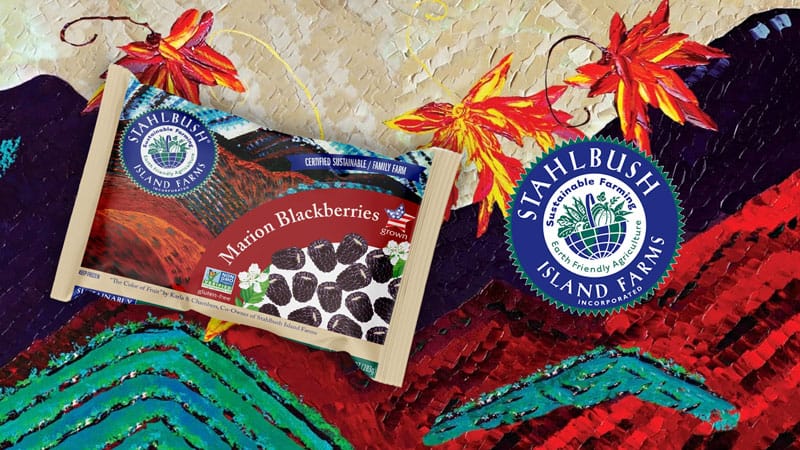
Featured Project
Custom WordPress + WooCommerce with brand storytelling
Stahlbush Island Farms is one of Oregon's most recognized agricultural brands — a sustainable, family-owned farm producing IQF fruits and vegetables shipped to retailers and consumers across the country. Their website does several jobs at once: tells a sophisticated sustainability and farming-practice story to consumers, supports retail buyer relationships through detailed product specifications, drives direct e-commerce purchases, and houses recipes and educational content that compound SEO value over years. We built and have maintained the Stahlbush site as a custom WordPress + WooCommerce platform tuned for both brand storytelling and commerce. Through brand evolutions, leadership transitions, and product line changes, the Stahlbush site has stayed steady — exactly what a recognized national brand needs.
View Case StudyWordPress clients
Agriculture + WooCommerce
Corvallis, OR
Sustainable Oregon farm with IQF produce shipped nationally — custom WordPress + WooCommerce with brand storytelling and commerce in one platform.

K–12 Public Education
Corvallis, OR
K–12 public school district communication hub serving 6,000+ students across 14 schools, with non-technical content management.

NSF-Funded Research Program
Corvallis, OR
NSF-funded interdisciplinary research initiative at Oregon State University — custom WordPress for a multi-institution program with grant-funded timelines and university branding constraints.

International Nonprofit
Oregon
International faith-based nonprofit building homes for families in poverty — custom WordPress supporting donor engagement, trip registration, and bilingual content.
How it works
Most custom WordPress builds take 4–6 weeks from kickoff to launch.
We start with a working session covering your organization's audiences, content priorities, brand identity, technical requirements, and success metrics. By the end of this week, you have a documented project scope and a shared understanding of what the site needs to accomplish.
We design the site from scratch — homepage, key page templates, navigation structure, and content patterns — built around your brand, your content, and your audiences. Mobile-first throughout. You review and approve before we move to development.
We develop the custom WordPress theme: PHP templates, custom post types and taxonomies, custom Gutenberg blocks, performance tuning, and SEO foundations. Schema markup, Google Analytics 4, and Search Console setup happen here too.
If you're migrating from an existing site (WordPress, Squarespace, Wix, static HTML), we migrate content, redirect old URLs to new ones to preserve SEO equity, and verify nothing breaks. For new sites without existing content, this step is dedicated to content authoring support.
We test the site end-to-end across browsers and devices, verify accessibility, confirm performance benchmarks, and coordinate the launch. Launch happens on a date you choose, with us on call.
Once you're live, we host your site, maintain WordPress core and plugin updates, monitor performance, handle support requests, and develop new features as your organization evolves. Most of our WordPress clients have been with us for 5+ years.
What our clients say
Over the past two years, Abide Web Design has provided strategic guidance on website design and the development of our website as a communication hub for the district. They worked directly with our communications coordinator in development and design, and he created a user-friendly system that non-technical staff can maintain. That has been a crucial aspect of keeping our website up-to-date.
FAQ
Page builders create bloated DOM trees, slow page loads, vendor lock-in, and ongoing licensing costs. They also make WordPress updates risky — page builder updates can break sites in subtle ways that take hours to diagnose. We build with PHP, native WordPress templating, and lightweight Gutenberg blocks where they fit. The result is a faster site, cleaner code, and a build that's easier to maintain over years rather than months.
Yes — migrations are a regular part of our work. We've handled migrations from Squarespace, Wix, Shopify (when paired with WooCommerce), Webflow, and various legacy CMS and static HTML sites. Migrations typically include content, images, page structure, blog and news posts, and SEO equity preservation through 301 redirect mapping. The migration phase is usually 1–2 weeks depending on data volume.
We host the sites we build, and update management is part of our managed hosting. WordPress core and security updates are applied within days of release after compatibility testing. Plugin updates are applied weekly after we've verified they don't introduce issues. If something does break, we have rollback capability — you don't lose your site to an automatic update.
Yes — content management is a primary design constraint for every site we build. We use the native WordPress editor with custom Gutenberg blocks designed around your team's content patterns. Several of our clients have non-technical staff who maintain their sites without developer involvement. The Corvallis School District communications coordinator is a good example — he maintains the site daily.
We build with the block editor. Gutenberg has matured significantly since its 2018 introduction, and the custom block ecosystem (especially ACF Pro blocks and block.json patterns) gives editors a clean, predictable content experience without the complexity of full-site editing or page builders. The classic editor is still available as a fallback for specific content types where it makes sense.
We tune every site for Core Web Vitals from day one. The typical performance stack includes: object caching (typically Redis), full-page caching with cart/checkout exclusions for WooCommerce sites, image optimization with modern formats (AVIF, WebP), lazy loading, CDN integration, asset minification and concatenation, and database query optimization. Target page load times: under 2 seconds on desktop, under 3 seconds on mobile.
Yes. WCAG 2.2 AA accessibility is the baseline for every site we build, not an upgrade. That includes contrast ratios, keyboard navigation, screen reader compatibility, ARIA landmarks, focus management, and accessible form patterns. For public-sector clients, accessibility compliance often has regulatory implications (Title II of the ADA, Section 508), and we treat those requirements as non-negotiable.
A standard custom WordPress build runs 4–6 weeks from kickoff to launch. Larger projects with complex integrations, multi-stakeholder review processes, or extensive content migration can run 8–12 weeks. Our Website in 1 Week option is a flat $3,500 for organizations that need to launch quickly without complex requirements.
Not always. For organizations that need to launch quickly with a focused budget, our Website in 1 Week option ($3,500 flat) is purpose-built for that case — still custom WordPress, still mobile-responsive, still tuned for performance, just with a tighter scope. We're happy to talk through whether that or a larger custom build fits your needs.
Fill out our project inquiry form or call us at (541) 224-5048. We'll send back a free estimate and schedule a time to talk through your project.
Ready to talk?
Or call us at (541) 224-5048 — one of the partners will pick up.
